The West Bank of Luxor is one of the most remarkable archaeological landscapes in the world, where the silence of the desert hides some of ancient Egypt’s greatest treasures. Unlike the lively East Bank, this side of the Nile offers a more reflective and mysterious atmosphere, where tombs, temples, and ancient stories are carved deep into the cliffs and valleys.
Crossing the Nile to the West Bank feels like entering another world. The scenery quickly shifts from urban life to vast desert plains, rocky hills, and hidden necropolises. This area was considered the land of the afterlife by the ancient Egyptians, which is why so many royal tombs and sacred sites were built here. Today, it remains a place of discovery, history, and quiet wonder.
One of the most famous highlights of the West Bank is the Valley of the Kings. This ancient burial ground contains the tombs of powerful pharaohs, including Tutankhamun. Inside, visitors can see detailed wall paintings that illustrate beliefs about the afterlife and the journey of the soul. The atmosphere is both fascinating and deeply symbolic, offering a rare glimpse into ancient spiritual life.
Nearby, the Valley of the Queens reveals the resting places of royal women and children. These tombs are beautifully decorated, showcasing delicate artwork and inscriptions that reflect the importance of queens in ancient Egyptian society. The quiet surroundings make the experience even more powerful and reflective.
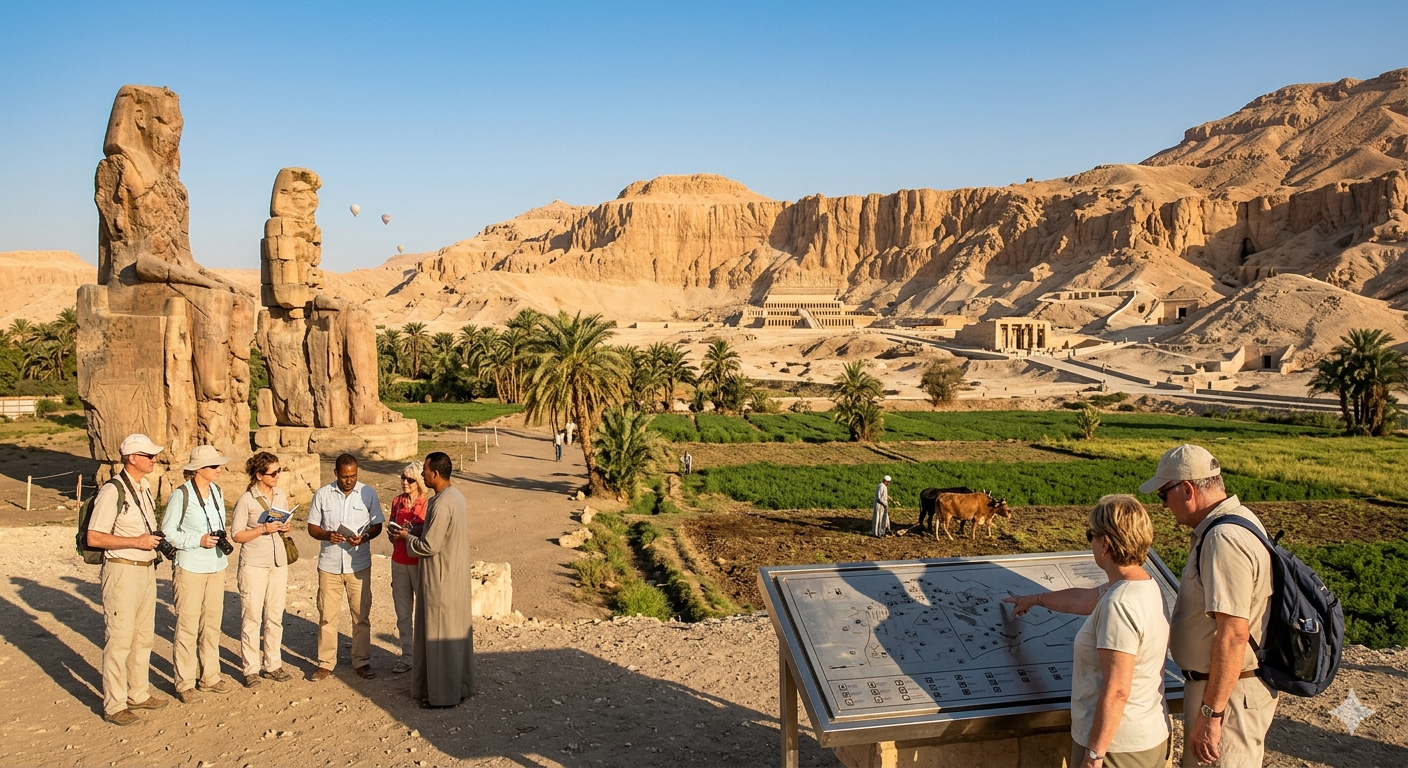
Another iconic site is the Temple of Hatshepsut, an architectural masterpiece built into the cliffs. Dedicated to one of Egypt’s most powerful female pharaohs, the temple stands as a symbol of strength and elegance. Its terraces, columns, and detailed reliefs blend naturally with the surrounding mountains, creating a striking visual harmony.
The West Bank is also home to the Colossi of Memnon, two massive stone statues that have stood for thousands of years. Once guarding a great mortuary temple, they now serve as silent witnesses to history, welcoming visitors with their timeless presence.
Exploring the West Bank is best done with a guided tour, as the stories behind each site add depth to the experience. Early morning visits are especially recommended to avoid the heat and enjoy the calm desert atmosphere. Comfortable walking shoes, water, and sun protection are essential for a smooth journey through the open landscape.
The best time to visit is between October and April, when the weather is cooler and more suitable for outdoor exploration. Taking time to move slowly between sites allows travelers to fully absorb the history and atmosphere of the area.
The West Bank of Luxor is not just a collection of ancient monuments—it is a journey into Egypt’s spiritual and royal past. Every tomb and temple tells a story of power, belief, and artistry that has survived for thousands of years. Visiting this extraordinary landscape leaves travelers with a deep appreciation of Egypt’s timeless legacy.